Skip to content

The grain that fed civilisations

Millet

Tiny seeds, a giant story

Millets are a highly varied group of small-seeded grasses grown all over the world for food and fodder. Tough, drought-proof and naturally gluten-free, they may have nourished people for around 7,000 years — and are now hailed as a grain for a hotter, hungrier planet.

~7,000
years of human use
10–12
genera of millet grasses
30.9 Mt
harvested worldwide (2022)
0%
gluten — naturally

Source: Wikipedia: Millet

Millet
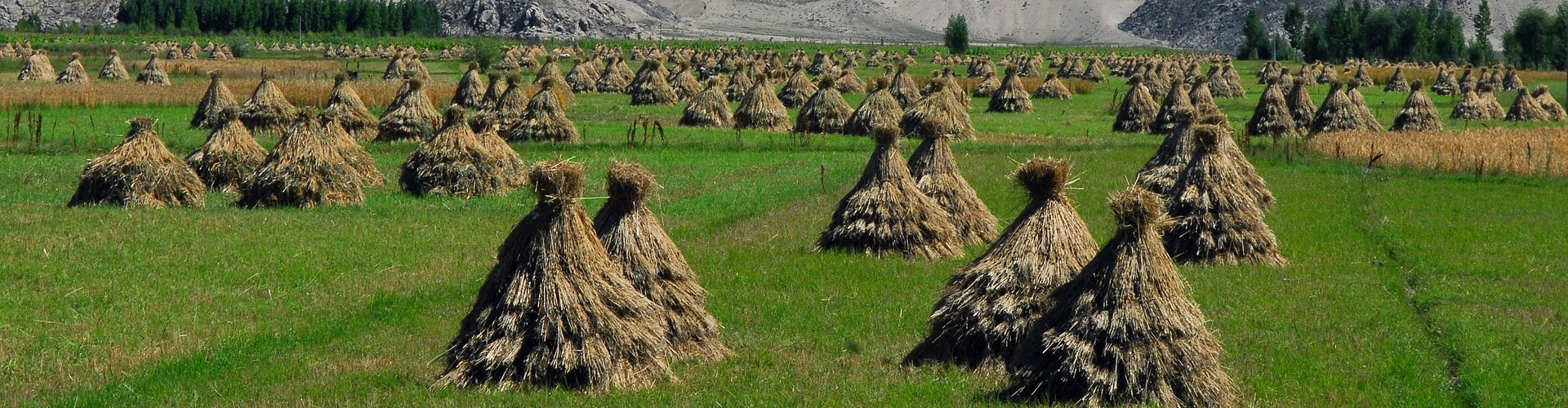
MilletImage:Herovaclicks, CC BY 4.0, via Wikimedia Commons

Overview

What exactly is millet?

“Millet” is not a single plant but a collective name for many small-grained cereal grasses. Most belong to the grass family Poaceae, and the majority sit within a single tribe, the Paniceae.

Millets are small-grained, annual, warm-weather cereals. They are remarkably tolerant of drought and other harsh conditions, yet their nutrient content is similar to that of major cereals such as wheat and rice. Botanists usually distinguish 10–12 genera of grasses that are grown as millets.

The different millets are not all close relatives — they belong to different tribes and subfamilies of the grasses. Within the wider picture they are kin to sorghum and maize, and far more distant cousins of wheat and barley. Like maize, millets are warmth- and light-loving C4 plants, which is part of the secret to their efficiency in hot, dry climates.

By the size of the grain, the millets fall into two broad camps: the large-seeded sorghums, which give higher yields, and the small-seeded “true” or minor millets of the tribe Paniceae and relatives — pearl, finger, proso, foxtail and many more. Sorghum is sometimes counted as a millet (“great millet”) and sometimes treated as a cereal in its own right.

They are crops of the semi-arid tropics, above all in Asia and Africa — especially India, Mali, Nigeria and Niger — with around 97% of world production in developing countries. Farmers favour millet for its productivity and its very short growing season under hot, dry conditions.

Source: Wikipedia: Millet

Grain-millet heads filling out in the field.
Grain-millet heads filling out in the field.Image:Unbekannt, Public domain, via Wikimedia Commons
Foxtail millet (Setaria italica) in an 1804 Japanese botanical illustration.
Foxtail millet (Setaria italica) in an 1804 Japanese botanical illustration.Image:AnonymousUnknown author, CC BY 4.0, via Wikimedia Commons

The family

Meet the main millets

Pearl millet is by far the most widely grown of the true millets. Alongside it, a whole family of grains feeds different corners of the world — each with its own look, taste and home turf.

Pearl millet

Pearl millet

Cenchrus americanus (Pennisetum glaucum)

The most commonly cultivated millet. Domesticated in the Sahel of West Africa, it is one of the two great dryland crops (with sorghum) across semi-arid Africa and South Asia. In Namibia it is the dominant food staple, known locally as mahangu.

Wikipedia: Pearl millet

Roger Culos, CC BY-SA 3.0, via Wikimedia Commons

Finger millet

Finger millet

Eleusine coracana

Native to the highlands of East Africa and domesticated before the third millennium BC. Hugely important in South India, where it is known as ragi and turned into flatbreads (ragi rotti) and dough balls (ragi mudde).

Wikipedia: Finger millet

Sureshpadmanabha, CC BY-SA 4.0, via Wikimedia Commons

Proso millet

Proso millet

Panicum miliaceum

Also called common or broomcorn millet. Famous for an extremely short life cycle — some varieties ripen just 60 days after sowing — and for producing grain more efficiently per drop of water than any other grain tested.

Wikipedia: Proso millet

Jschnable, CC BY 4.0, via Wikimedia Commons

Foxtail millet

Foxtail millet

Setaria italica

One of the oldest cultivated millets, a staple of the Early Neolithic in China. Described by Linnaeus in 1753 as Panicum italicum, it remains an important food and bird-seed grain across Asia.

Wikipedia: Foxtail millet

Salil Kumar Mukherjee, CC BY-SA 4.0, via Wikimedia Commons

Sorghum

Sorghum

Sorghum bicolor

Sometimes called “great millet”. With much larger grains and higher yields, it is usually treated as a cereal of its own and is a dietary cornerstone across Africa and India.

Wikipedia: Sorghum

No machine-readable author provided. Pethan assumed (based on copyright claims)., CC BY-SA 3.0, via Wikimedia Commons

Teff

Eragrostis tef

A tiny-grained millet, also called dwarf millet. In Ethiopia and Eritrea it is the single most important food plant, ground into flour for the spongy flatbread injera.

Wikipedia: Teff

Kodo, little & barnyard millet

Kodo, little & barnyard millet

Paspalum · Panicum · Echinochloa

A cluster of hardy “minor millets”. Kodo millet is very drought-resistant and grows on poor soils; little millet was domesticated in India around 3000 BC; barnyard millets are grown for food and fodder across Asia.

Wikipedia: Kodo millet

Sengai Podhuvan, CC BY-SA 3.0, via Wikimedia Commons

Job's tears

Coix lacryma-jobi

An unusual grass grain — sometimes called adlay millet — whose hard, tear-shaped grains are eaten as a cereal and strung as beads. It rounds out the remarkably broad millet family.

Wikipedia: Job's tears

Sources: Wikipedia: MilletWikipedia: Pearl milletWikipedia: Finger milletWikipedia: Proso milletWikipedia: Foxtail milletWikipedia: SorghumWikipedia: TeffWikipedia: Kodo milletWikipedia: Job's tears

History

A grain at the dawn of farming

Millet may have been eaten by humans for around 7,000 years, and some researchers credit it with “a pivotal role in the rise of multi-crop agriculture and settled farming societies.” Its story stretches from Neolithic China to Bronze Age Europe.

  1. c. 8700–10,300 years ago · China

    Some of the earliest evidence of millet farming comes from Cishan in northern China, where proso-millet remains were found in storage pits alongside pottery and stone tools. Foxtail millet appears there around 8,700 years ago. Chinese myth credits the grain to Shennong and to Hou Ji — whose name means “Lord Millet”.

  2. 3700–3000 BC · Indian subcontinent

    Kodo millet was domesticated around 3700 BC and little millet around 3000 BC in the Indian subcontinent. Finger millet had spread to South India by about 1800 BC; pearl millet arrived by 2000–1700 BC.

  3. before 3000 BC · Africa

    Finger millet is native to the highlands of East Africa and was domesticated before the third millennium BC. Pearl millet was domesticated in the West African Sahel from a wild ancestor, tentatively around 6000 BC.

  4. from ~1600 BC · Europe

    Proso millet travelled from East Asia to the region north of the Black Sea by the 17th century BC. It reached Italy and south-eastern Europe around 1500 BC, central Europe around 1400 BC, and northern Germany from 1200 BC.

  5. Antiquity & Middle Ages

    Millet was one of the most widely grown grains. The Greek poet Hesiod wrote of it, and Theophrastus listed it alongside wheat. In early modern times the potato and maize almost entirely displaced millet in Europe, where it came to be dismissed as a poor man's “famine grain”.

Sources: Wikipedia: MilletWikipedia: Proso millet

Millet still ripening in the fields of Kerala, India.
Millet still ripening in the fields of Kerala, India.Image:Kaitha Poo Manam, CC BY-SA 4.0, via Wikimedia Commons

Agriculture

Built for heat, drought and poor soil

What makes millet special is not glamour but grit. It thrives where other grains fail — on dry, infertile land, in short seasons, under a punishing sun.

Pearl millet is one of the two major dryland crops — alongside sorghum — across the semi-arid, less fertile farming regions of Africa and South-East Asia. Millets are not only adapted to poor, dry soils, they are also more reliable there than most other grain crops. They will, however, reward better conditions: with irrigation and soil supplements, grain yields can be two to four times higher.

Speed is another superpower. Some proso-millet varieties produce grain just 60 days after planting, and proso uses water more efficiently per unit of grain than any other tested cereal. The trade-off is yield: millet gives the lowest average yield of all the cereals, which is one reason higher-yielding maize keeps gaining ground in traditional millet country. But millet has a decisive advantage — even in very bad weather, the harvest almost never fails completely.

Breeding can change the picture. ‘Okashana 1’, developed in India from a wild-growing variety from Burkina Faso, doubled yields; released in Namibia in 1990, it became the country's most popular variety and spread on to Chad, Mauritania and Benin.

Millet is not trouble-free. It can be attacked by insect pests such as stem borers, the millet midge, aphids, thrips, beetles and grasshoppers, and by serious fungal diseases including blast, downy mildew, ergot, grain mould, rust and smut. Bacterial and viral diseases are generally less damaging.

Sources: Wikipedia: MilletWikipedia: Proso milletWikipedia: Pearl millet

Checking a pearl-millet crop in the field.
Checking a pearl-millet crop in the field.Image:Swathi Sridharan (ICRISAT), CC BY-SA 2.0, via Wikimedia Commons
Pearl millet ripening in summer.
Pearl millet ripening in summer.Image:Herovaclicks, CC BY 4.0, via Wikimedia Commons

Nutrition & health

Small grain, serious nutrition

Millets have nutritional profiles comparable to conventional cereals such as wheat and rice — and a few stand-out strengths of their own.

They are high in protein, fibre, calcium, iron and zinc. Proso millet in particular is rich in minerals: it supplies phosphorus, magnesium and potassium, and — compared with other cereals — notably high levels of silicon (silica), iron and B vitamins. Around 100 g of proso millet provides roughly 1,484 kJ (355 kcal).

Millet and sorghum can also be high in phenolic compounds (about 35–50 mg per 100 g), which are largely regarded as health-promoting: they lower the glycaemic index and often reduce blood cholesterol. Some studies associate regular millet consumption with a lower risk of oesophageal cancer than diets based on wheat and maize.

Crucially for many people, millet is naturally gluten-free. It can replace gluten-containing cereals for those with coeliac disease, non-coeliac gluten sensitivity or wheat allergy, and is used to bake gluten-free goods and even brew gluten-free beer — though there remains a risk of contamination with gluten-containing grains.

There are caveats. Millet contains antinutrients that can interfere with digestion, and substances such as flavonoids and dhurrin that can hinder the body's uptake of iodine — so very millet-heavy diets have been linked to endemic goitre in parts of rural Africa and Asia. These effects can be reduced by processing techniques such as malting, milling, cooking and fermentation.

Source: Wikipedia: Millet

Hulled proso millet — the familiar golden grain.
Hulled proso millet — the familiar golden grain.Image:Gaurav Dhwaj Khadka, CC BY 4.0, via Wikimedia Commons
Pearl-millet grain.
Pearl-millet grain.Image:Sznu, CC BY-SA 4.0, via Wikimedia Commons

Food & drink

From porridge to beer: millet in the kitchen

Per-person millet consumption is highest in West Africa, but millet feeds people on every continent — as porridge, flatbread, dumplings, snacks and a surprising number of drinks.

In the African Sahel, millet is a staple — a major part of all cereals eaten in Burkina Faso, Chad and the Gambia, and more than 65% of the grain consumed in Niger and Namibia. It is ground and mixed with milk to make fura and brukina. In India it is mostly eaten as flour: in Karnataka, finger millet (ragi) becomes the flatbread ragi rotti and the dough balls known as ragi mudde.

Europe and Russia know millet best as porridge. In Germany it is eaten sweet — for example with milk and berries for breakfast. In Russia, millet porridge, often made with pumpkin, remains common and is promoted for its health benefits. In Ukraine, the millet porridge kulish was a staple of the Zaporozhian Cossacks and still features in the cuisine today.

Millet also turns into drinks. Fermented millet beverages include bushera in Uganda, mangisi in Zimbabwe and marrisa in Sudan; traditional millet beers include dolo in West Africa and pombe in East Africa. In the Himalayas — Nepal, Sikkim and Darjeeling — millet is fermented into drinks such as tongba and raksi, and in China it is distilled into the spirits known as baijiu. In Vietnam, millet is the heart of the sweet snack bánh đa kê.

Ragi mudde — finger-millet dough balls, a staple in Karnataka, India.
Ragi mudde — finger-millet dough balls, a staple in Karnataka, India.Image:Vsigamany, CC BY-SA 4.0, via Wikimedia Commons
Ragi rotti, a finger-millet flatbread, with chutney.
Ragi rotti, a finger-millet flatbread, with chutney.Image:Yatish H.S, CC BY-SA 4.0, via Wikimedia Commons
Gijang-bap — Korean rice cooked with proso millet.
Gijang-bap — Korean rice cooked with proso millet.Image:Dr 방원장, CC BY 4.0, via Wikimedia Commons
Tongba, a warm fermented millet drink of the Himalayas.
Tongba, a warm fermented millet drink of the Himalayas.Image:Jweatherley, Public domain, via Wikimedia Commons
Bánh đa kê, a Vietnamese sweet millet snack.
Bánh đa kê, a Vietnamese sweet millet snack.Image:Minh28397, CC BY-SA 4.0, via Wikimedia Commons

Source: Wikipedia: Millet

Production & economy

Who grows the world's millet?

In 2022 the world harvested about 30.9 million tonnes of millet. One country towers over the rest — and most of the rest are in Africa.

30.9 Mt
global millet harvest (2022)
38%
of the world total grown in India
97%
of production in developing countries
#3
China's rank among producers

Top millet producers (2022, million tonnes)

India11.8 Mt
Niger3.7 Mt
China2.7 Mt
Chad0.7 Mt

India is the top millet producer in the world, growing some 11.8 million tonnes a year — around 38% of the global total and nearly triple its nearest rival. Eight of the remaining nine countries in the top ten are in Africa, from Niger (3.7 Mt) down to Chad (0.7 Mt); the single exception is China, the world's number three at 2.7 Mt.

Because millet thrives where richer crops cannot, it remains an economic lifeline in exactly the regions that need it most — even though its low yields mean higher-yielding maize keeps spreading into traditional millet-growing areas.

Source: Wikipedia: Millet

Global millet output by country.
Global millet output by country.Image:AndrewMT, CC BY 3.0, via Wikimedia Commons
Pounding mahangu (pearl millet) in Namibia.
Pounding mahangu (pearl millet) in Namibia.Image:Ttnghoshi, CC BY-SA 4.0, via Wikimedia Commons

2023

The International Year of Millets

In March 2021, at India's proposal, the United Nations General Assembly and the FAO declared 2023 the International Year of Millets.

The aim was to spotlight millet's role in the fight against hunger in Africa and Asia, the challenge of farming in a changing climate, and the crop's global and local marketing. Because millets need less water and ripen faster than many imported cereals, they are seen as a resilient alternative — with high nutritional value to match.

India, which contributes the lion's share of Asian millet production, used the year to fund millet research and to distribute millets through its public food-distribution system, helping to reintroduce an ancient grain to modern plates.

Sources: Wikipedia: International Year of MilletsWikipedia: Millet

Millet fields below the Annapurna range, Nepal.
Millet fields below the Annapurna range, Nepal.Image:Mikael Häggström, Public domain, via Wikimedia Commons

Beyond the plate

Fodder, fibre and fuel

Millet is not only human food. Its toughness and fast growth make it valuable for animals and industry too.

As forage, millet has real advantages. Animals such as lambs gain weight faster on millet than on forage sorghum, and it makes good hay or silage. Crucially, millet does not contain the toxic prussic acid sometimes found in sorghum, and its rapid growth lets farmers wait for late-spring or summer moisture before grazing it.

Industrially, sorghum is the star: besides its grain, its stalks yield natural fibres (fibre sorghum), and its large, carbohydrate-rich biomass makes it a promising energy crop for biogas in dry regions. In the United States, switchgrass — a relative within the millet grasses — is studied as a source of cellulosic ethanol.

Sources: Wikipedia: MilletWikipedia: Sorghum

Harvesting sorghum, the giant of the millet family.
Harvesting sorghum, the giant of the millet family.Image:Thesagemarmot, CC BY-SA 3.0, via Wikimedia Commons

Curiosities

Did you know?

A few delightful footnotes from millet's long history.

“Lord Millet”

Chinese myth attributes the domestication of millet to Hou Ji, whose very name means “Lord Millet”, and to the legendary emperor Shennong.

Wikipedia: Millet

The crushing root of the word

“Millet” comes via Old French from the Latin milium, ultimately from a Proto-Indo-European root *mele- meaning “to crush” — fitting for a grain made into flour.

Wikipedia: Millet

The world's oldest noodles?

At the Lajia site in northern China, a 4,000-year-old earthenware bowl was found containing well-preserved noodles said to be made from millet — though the claim has been disputed.

Wikipedia: Millet

60 days to harvest

Some proso-millet varieties go from seed to grain in just 60 days, and proso produces grain more efficiently per unit of water than any other cereal yet tested.

Wikipedia: Proso millet

FAQ

Frequently asked questions

Is millet gluten-free?

Yes. Millet is naturally gluten-free and can replace gluten-containing cereals for people with coeliac disease, non-coeliac gluten sensitivity or wheat allergy. It is even used to brew gluten-free beer. There is, however, a risk of contamination with gluten-containing grains during processing.

Source: Wikipedia: Millet

How many kinds of millet are there?

Botanists usually recognise around 10–12 genera of grasses grown as millets. The most important crops are pearl, finger, proso, foxtail, kodo, little, barnyard and browntop millet — plus sorghum, which is sometimes counted as “great millet”.

Source: Wikipedia: Millet

Where is the most millet grown?

India is by far the largest producer, growing about 38% of the world's millet — nearly triple its nearest rival. Most of the other top producers are in Africa, led by Niger, while China ranks third worldwide.

Source: Wikipedia: Millet

Why is millet so good in dry climates?

Millets are warmth-loving C4 plants that tolerate drought and poor soils, and they ripen very quickly — some proso varieties in just 60 days. They use water extremely efficiently and, unlike many grains, rarely fail completely even in bad weather.

Sources: Wikipedia: MilletWikipedia: Proso millet

What does millet taste like and how is it eaten?

Millet has a mild, slightly nutty flavour. It is eaten as porridge (sweet with milk and berries in Germany, often with pumpkin in Russia), as flatbreads and dough balls in India (ragi rotti and ragi mudde), as snacks, and fermented into a wide range of drinks and beers.

Source: Wikipedia: Millet

Why was 2023 the International Year of Millets?

At India's proposal, the UN and FAO declared 2023 the International Year of Millets to raise awareness of millet's nutritional value and its role as a climate-resilient crop that uses less water and grows faster than many imported cereals.

Source: Wikipedia: International Year of Millets

Sources

Every fact on this page is drawn from Wikipedia and cited at the relevant section. The main articles used are listed below. All images come from Wikimedia Commons and are credited beneath each picture.